In this article
A familiar product can hide a surprisingly wide range of careers. The useful question is not simply “Which PepsiCo title is higher?” It is “What work would I do next, and what evidence shows I can learn it?”
A map of work, not a promotion ladder
PepsiCo’s public careers categories include technology, research and development, finance and legal, human resources and administration, marketing and sales, supply chain management and U.S. hourly jobs. Those groupings describe areas to explore. They do not establish a fixed sequence of promotions or promise that a particular transfer is available.
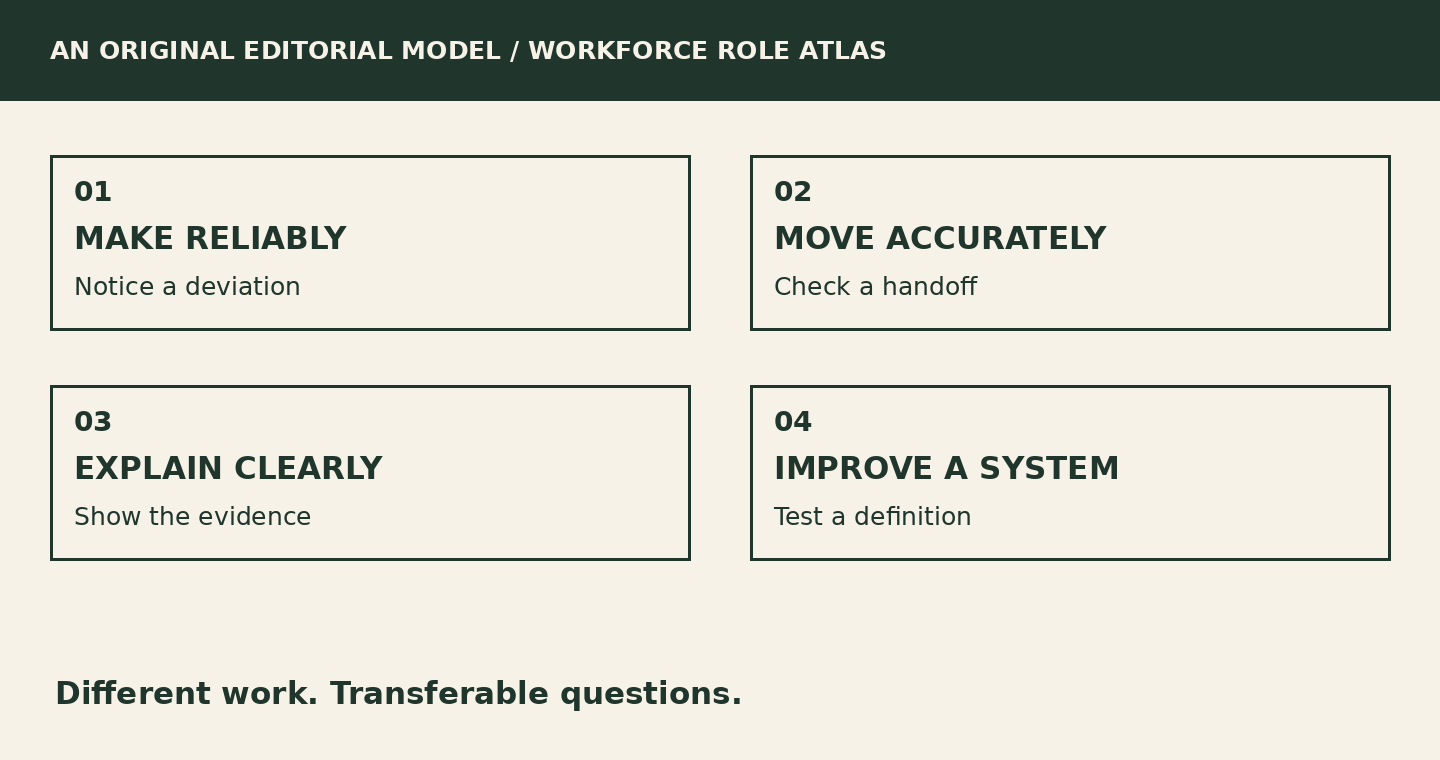
Compare a recurring problem
Start with a problem rather than a department. A production role might involve following a defined process and recognizing a deviation. A planning role might involve investigating why expected demand and available capacity disagree. A technology role might involve making information easier to use. These are broad illustrations, not descriptions of any current opening.
Now ask what each setting requires you to know, what decisions you may make and what happens when the situation is outside your authority. Two jobs can both involve problem-solving while differing greatly in technical preparation, location, schedule and responsibility.
Make a three-column comparison
- Work already demonstrated
- A task you have actually performed, with your own contribution distinguished from the team’s result.
- Work to learn
- A method, technical topic or setting that you have not yet practiced. Name the gap rather than hiding it behind enthusiasm.
- Requirement to confirm
- A condition in the specific posting, such as degree timing, certification, travel or work location, that cannot be inferred from a general careers page.
Invented career comparison
A reader has helped organize a student event and is exploring a planning internship. Their evidence is a scheduling spreadsheet, a recorded change when one room became unavailable and a short explanation of the tradeoff. That experience may show coordination and clear communication. It does not prove knowledge of industrial supply planning, and it does not satisfy a degree requirement by itself.
Separate interest, readiness and eligibility
Interest tells you what you want to investigate. Readiness concerns the work you can demonstrate and the support you may need. Eligibility concerns the actual requirements for the opportunity. A strong answer in one category does not automatically answer the other two.
For an existing employee, a development conversation can identify an approved way to learn about another function. For an external applicant, the public posting and recruiting process are the relevant route. An independent bottler’s role may belong to a different employer even when its products carry familiar brands. Confirm the employer on the posting instead of treating a brand as an employment contract.
Leave with one testable next question
“Can you clarify the project deliverable and the experience expected on day one?” is more useful than “Is this a good career?” It asks for information that can change your decision. Use the role-evidence lab to turn an interest into a small preparation brief, or read the early-career posting guide before comparing programs.
Sources and limits
Public sources checked October 16, 2026. Some careers or rewards sources were available as indexed official text rather than verified live rendering; the source ledger records this limit. Examples, models and questions are original editorial work. No private employee account was accessed.
- PepsiCo Careers: career areas. Public career-area categories and recruitment-fraud notice; individual job listings determine current requirements.